Women’s Weight Loss Personal Training
Built Around You.
Customized personal training, nutrition support, and accountability designed around your goals, your schedule, and your real life.
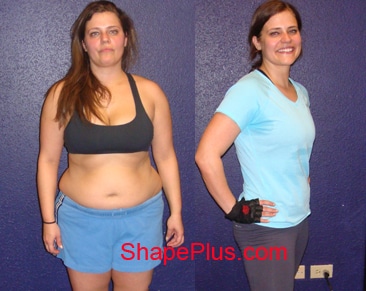
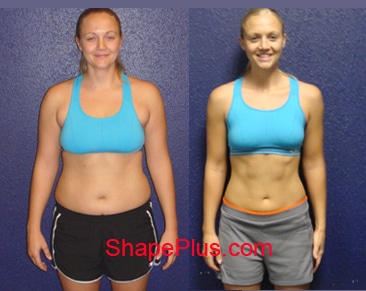
“I am forever grateful to Jess and the Shape Plus family for showing me something amazing” – Alyse H.
A Women’s Weight Loss Plan That Fits Your Life
Most weight loss programs begin with a workout schedule or a meal plan. We begin with the woman who has to follow it.
Your goals matter—but so do your work hours, family responsibilities, commute, sleep, energy, food preferences, support at home, and the amount of time you can realistically devote to training and preparing meals.
That is why Shape Plus builds your program around your real life. Your personal training, nutrition support, progress tracking, coaching, and accountability are connected through your individual MMAP® — Massive Multiple Action Plan®.
The goal is not to force your life around another weight loss program. It is to build the right program around you—so you can follow it consistently, make progress, and create results you can maintain.
What We Consider Before Building Your Weight Loss Plan
Your program does not begin with us telling you how many days to exercise or handing you a list of foods to eat. It begins with questions.
- When during the day do you have the most energy?
- What are your work hours, and how much time do you spend commuting?
- Do you have children or other family responsibilities?
- Is your spouse or significant other supportive of your goals?
- What time do you normally wake up and go to bed?
- How much time can you devote to training, grocery shopping, and preparing meals?
- What foods do you enjoy, and which ones do you know you will not eat consistently?
- What has made previous weight loss attempts difficult to maintain?
These are not side details. They help determine whether your program will actually fit your life.
Your Shape Plus trainer uses this information to plan your workouts, build your nutrition strategy, establish the right level of accountability, and identify obstacles before they become reasons to quit. Sometimes we build around a part of your schedule. Sometimes we help you make a small but important change to it.
Either way, your weight loss plan should reduce unnecessary friction—not become another source of stress.
What a Women’s Weight Loss Program May Include
There is no single workout schedule or eating plan that is right for every woman. Your program depends on your starting point, goals, training experience, schedule, recovery, preferences, and the date connected to the result you are working toward.
A Shape Plus women’s weight loss program may include:
- Coach-guided strength and circuit training: Often two or three sessions per week, with the exercises, weights, intensity, and progression customized for you.
- Cardiovascular training: The type, frequency, and duration are selected according to your goals, fitness level, available time, and ability to recover.
- Personalized nutrition support: A satisfying approach to meals, portions, protein, food choices, and timing that fits your tastes and daily routine.
- Progress tracking: Your trainer monitors changes in your performance, body measurements, weight, strength, habits, and consistency.
- Ongoing adjustments: Your workouts and nutrition strategy are updated as your body adapts, your schedule changes, or your progress slows.
- Coaching and accountability: Regular support helps you stay focused, solve problems, and continue following the plan outside the gym.
These elements come together in your individual MMAP® — Massive Multiple Action Plan®. Your MMAP® is built around your specific goals and your chosen Amazing Date—the meaningful date connected to the result you are working toward.
This is not a fixed program we hand to every woman. It is an example of how training, nutrition, progress tracking, and accountability may work together inside a plan built specifically for you.
Why Strength Training Is Part of a Women’s Weight Loss Program
Most women who come to Shape Plus are not simply trying to make the number on the scale smaller. They want to lose body fat, change how their clothes fit, feel stronger, and improve the shape and composition of their bodies.
Those goals are connected—but they are not exactly the same.
Losing weight through food restriction alone can reduce scale weight without creating the stronger, firmer result many women actually want. That is why resistance training is an important part of the Shape Plus approach.
Strength training can help you:
- Preserve or build lean muscle while losing body fat
- Improve your strength, balance, and physical ability
- Change your body composition—not only your body weight
- Develop more shape and definition as your body changes
- Make everyday activities feel easier
- Continue progressing as your fitness level improves
Muscle does use energy, but strength training should not be sold as a magical metabolism trick where gaining a few pounds of muscle automatically produces massive weight loss. Its real value is much greater than that.
Resistance training gives your body a reason to maintain valuable lean tissue while you are working to lose fat. It also allows us to measure progress through improvements in strength, repetitions, exercise quality, and performance—even during weeks when the scale does not tell the entire story.
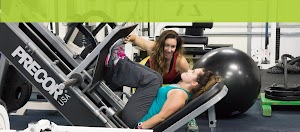
Your Shape Plus trainer selects exercises based on your experience, movement ability, goals, limitations, and confidence level. As you improve, your trainer adjusts the exercises, resistance, repetitions, and progression so the workout continues to challenge you appropriately.
The goal is not simply to weigh less.
The goal is to lose body fat while becoming stronger, more capable, and more confident in the body you are creating.
How Cardio Supports Women’s Weight Loss
Cardio has an important place in a well-designed women’s weight loss program—but it is not punishment for what you ate, and it should not replace strength training.
Cardio is one part of your individual MMAP®—not a separate punishment session and not a replacement for strength training.
Cardiovascular training can:
- Increase your overall activity and energy expenditure
- Improve the conditioning of your heart and lungs
- Help you feel less winded during workouts and everyday activities
- Improve your ability to recover between exercises and repeated bouts of effort
- Support reductions in body fat when combined with resistance training and an effective nutrition strategy
There is no single cardio prescription that every woman needs. Three twenty-minute sessions may be appropriate for one person, while another woman may need a different starting point, schedule, intensity, or form of activity.
Your cardio plan may include brisk walking, incline treadmill work, cycling, rowing, stair climbing, intervals, or another form of movement you can perform safely and consistently. Your trainer determines the type, frequency, intensity, and duration according to your goals, current fitness level, joint comfort, available time, strength-training schedule, and ability to recover.
We also do not treat the calorie number displayed on a treadmill, watch, or exercise machine as a guarantee. Those numbers are estimates, and the amount of energy used during a workout varies considerably from one person to another.
There is no magical time of day—or specific minute during a workout—when your body suddenly begins burning fat. Cardio can support fat loss whether it is performed in the morning, later in the day, by itself, or after strength training.
The best time to do it is the time that fits your individual plan and allows you to perform it consistently.
Cardio is a tool—not the entire weight loss plan.
We use enough cardio to help your plan work—not so much that it takes over your week, interferes with your strength training, or becomes something you dread.
When it is used correctly, cardio helps you improve your conditioning, do more during your workouts without feeling as winded, recover better, support your health, and contribute to the fat-loss results you are working to create.
How Nutrition Supports Women’s Weight Loss
You should not have to choose between making progress and enjoying your meals.
To lose body fat, your nutrition needs to support an overall calorie deficit. But simply eating as little as possible is not a smart weight loss plan.
Your body still needs enough protein and nutrient-dense food to support your workouts, recovery, energy, health, and valuable lean tissue while you lose weight.
A well-designed nutrition strategy may include changes to:
- Meal structure
- Portion sizes
- Protein intake
- Food choices
- Meal and snack timing
- Grocery shopping and food preparation
- Restaurant meals, weekends, and social events
The right approach depends on your goals, starting point, food preferences, hunger, schedule, family meals, training demands, medical considerations, and the habits that have made previous plans difficult to maintain.
When we build a nutrition strategy for a Shape Plus client, we begin with what she actually eats—not what an imaginary perfect person eats.
We look at the foods she enjoys, when she gets hungry, how much time she has to prepare meals, where she eats during the workday, what happens on weekends, and where her previous nutrition plans have broken down.
Then we make deliberate changes that support weight loss without turning every meal into a test of willpower.
We do not build nutrition plans for perfect weeks. We build them for workdays, family dinners, restaurants, weekends, celebrations, and the days when real life gets messy.
Your nutrition plan should be strong enough to create change—and realistic enough to survive your life.
Women’s Weight Loss Results Built One Person at a Time
No two women begin with the same body, schedule, experience, challenges, or goals. That is why no two Shape Plus weight loss programs are exactly the same.
The training, nutrition strategy, support, and adjustments may be different—but every successful program starts with the same principle:
Build the plan around the woman who has to follow it.
Women’s Weight Loss Personal Training FAQs
Is it better to work out in the morning?
Not necessarily.
Before you set your alarm earlier and give up sleep just to squeeze in a morning workout, remember this: morning is only better if it actually works better for you.
Morning can be a great time to train if that is when you have the most energy and can be consistent. For another woman, lunchtime or evening may fit her schedule, energy, and performance better.
You do not have to exercise on an empty stomach, and your body does not suddenly switch into a special fat-burning mode simply because you train early or perform cardio immediately after lifting weights.
The right time depends on your schedule, responsibilities, sleep, energy, training performance, and when you are most likely to complete the workout consistently.
When we build a Shape Plus client’s individual MMAP®, workout timing becomes part of the larger plan—not a rule imposed on everyone.
The best time to work out is the time that fits your schedule, allows you to train well, and gives you the greatest chance of following your plan consistently.
How quickly should a woman lose weight?
There is no perfect rate that applies to every woman.
It is natural to want the scale to move quickly—especially when you are working hard. But faster is not automatically better, and one week of scale movement does not tell you whether a weight loss plan is working well.
Your starting point, body size, nutrition, training, medical history, medications, sleep, stress, monthly cycle, and consistency can all affect how quickly your weight changes. Progress may move faster during some parts of a program and more slowly during others.
An overly aggressive approach may be difficult to follow, interfere with training and recovery, and work against the stronger body-composition result you are trying to create.
With Shape Plus clients, we look for meaningful, measurable progress without judging the entire program by the scale alone. Strength, measurements, clothing fit, energy, habits, and consistency can also show whether the plan is working.
The right pace is one that produces progress while allowing you to train effectively, eat satisfying meals, preserve valuable lean tissue, and continue following your plan.
Do I need both strength training and cardio to lose weight?
For many women, a well-designed weight loss plan includes both.
Strength training and cardio do different jobs. Strength training helps you become stronger and preserve or build lean muscle while losing body fat. Cardio improves conditioning, increases activity, and can contribute to the energy deficit needed for weight loss.
The right balance depends on your goals, current fitness level, training experience, schedule, joint comfort, and ability to recover.
With Shape Plus clients, strength training usually provides the foundation. Cardio is added in the amount and form that best supports the individual plan.
Strength training shapes and strengthens the body you are creating. Cardio supports the plan—it does not replace it.
Do I have to follow a restrictive diet?
No.
You should not have to spend your entire day hungry, avoid every food you enjoy, or dread every meal just to make progress.
A nutrition plan that cannot survive a normal workweek, a family dinner, or an occasional meal out is unlikely to become part of your life.
The right nutrition strategy is built around your goals, food preferences, schedule, current habits, and the changes you can consistently make. It should improve meal structure, portions, protein, food choices, and timing without pretending that every woman needs to eat exactly the same foods.
When we build nutrition plans for Shape Plus clients, we look at more than calories. We consider work hours, family meals, eating out, weekends, food preparation, hunger, preferences, and the situations that have made previous plans difficult to maintain.
Your nutrition plan should create change—but it still has to be satisfying enough for you to follow it.
How many days per week should I train?
For many women, two or three strength-training days per week is a strong starting point.
The right frequency depends on your goals, training experience, schedule, recovery, and the other activity in your week. More training is not automatically more effective if you cannot recover from it or complete it consistently.
Many Shape Plus clients complete coach-guided strength or circuit training two or three times per week, with cardio and additional activity planned around those sessions. That does not mean every woman receives the same weekly schedule.
We build the training frequency around what will challenge you appropriately and what you can consistently complete—not around how many workouts we can squeeze onto a calendar.
What happens when my weight loss progress slows?
A slowdown does not mean you failed—and it does not automatically mean you need more cardio or less food.
Weight loss rarely moves at exactly the same pace every week. Changes in activity, nutrition, sleep, stress, recovery, medications, monthly cycles, and daily routines can all affect what you see on the scale.
Before changing the plan, look at the full picture:
-
Are the workouts still challenging you appropriately?
-
Has your daily activity changed?
-
Has your nutrition been consistent?
-
Have portions, meals, weekends, or food timing gradually shifted?
-
Are stress, sleep, recovery, medications, or schedule changes affecting progress?
-
Are your strength, measurements, clothing fit, or body composition changing even when scale weight is not?
When a Shape Plus client’s progress slows, we review the entire plan before deciding what should change. The adjustment may involve training, cardio, nutrition, daily activity, recovery, accountability—or simply giving a successful plan enough time to work.
A slowdown is not the end of the program. It is information we use to make the program better.
Ready to Do Something Amazing?
You do not need another generic workout plan or restrictive diet.
Book your Free Goal Assessment and let’s talk about your goals, what has made previous weight loss attempts difficult, and how the right training, nutrition, and accountability plan could fit your real life.
You will meet with an experienced Shape Plus trainer—not a salesperson. There is no pressure. Just an honest conversation about where you are, where you want to go, and what it may take to get there.