(303) 726-8279

Shape Plus Personal Trainer Logo

Men’s Strength Training

Customized personal training to help men build muscle, get stronger, improve performance, and develop a more muscular, athletic physique.

“My experience at Shape Plus has literally transformed my life” – Jeremy W.

Home » Men’s Strength Training

Why Men Should Strength Train

Most men start strength training because they want to look stronger—and know they actually are stronger.

They want to build muscle, lose the soft look, become more attractive, and develop a body that looks powerful, athletic, and capable. They also want to lift more, perform better, and feel physically confident in everyday life.

There is nothing shallow about wanting to look better. Looking strong, feeling strong, and being strong changes the way a man carries himself.

A stronger chest, broader shoulders, a thicker back, muscular arms and legs, and a tighter waist can completely change how a man looks in a T-shirt, a suit, or a swimsuit—and how confidently he carries himself when he walks into a room.

But looking stronger is only part of it.

Strength training should make you stronger where it matters: at work, in sports, while carrying your kids, moving furniture, shoveling snow, traveling, and handling whatever real life puts in front of you.

The goal is not simply to survive a hard workout. The goal is to build a stronger, more muscular, more capable version of yourself.

How that happens will be different for every man.

Some men want to add noticeable size. Some want to become stronger and leaner. Some want better athletic performance. Others want to rebuild the muscle, confidence, and physical ability they have lost over the years.

That is why random workouts are not enough.

Your exercises, weights, repetitions, training volume, recovery, and nutrition must work together around your body, your schedule, your experience, and the results you want.

A well-designed strength-training program does more than change what you see in the mirror.

It changes what you can do—and the confidence you carry from the boardroom to the bedroom.

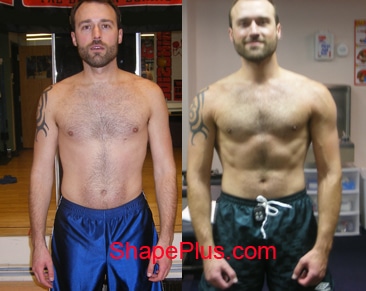
Jeremy W.

Jeremy’s before-and-after men’s strength training results at Shape Plus

“My experience at Shape Plus has literally transformed my life.”

Read Jeremy’s Story →

There’s no guarantee of specific results.
Results can vary.
What Strength Training Can Do for Men

Strength training can change the way a man looks, feels, moves, and performs.

Done correctly, it can help build a broader chest, stronger shoulders, a thicker back, more muscular arms and legs, and a leaner, more athletic appearance. It can improve posture, create better proportions, and make clothes fit the way you want them to fit.

Looking amazing and feeling amazing makes life more fun. You carry yourself differently, show up with more confidence, and bring more energy to everything you do.

And strength training gives you even more than that.

Strength training can also help you:

  • Build measurable strength and muscular endurance
  • Improve athletic performance, power, and coordination
  • Maintain or increase muscle as you get older
  • Support stronger bones, joints, and connective tissue
  • Improve body composition by building muscle while reducing body fat when nutrition supports that goal
  • Move with greater control, balance, and confidence
  • Handle the physical demands of work, recreation, and everyday life more easily

The changes will not be identical for every man.

Your age, training history, genetics, nutrition, recovery, consistency, and starting point will all influence how quickly you gain muscle, lose fat, and become stronger. Some men respond quickly in certain areas. Others need more time, more recovery, or a different approach.

What matters is that the program creates progress you can see, feel, and measure.

More muscle. More strength. Better performance. A more athletic physique. And a body that is increasingly prepared for whatever you ask it to do.

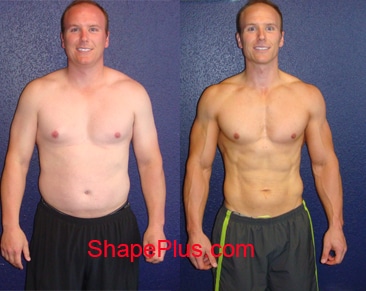
Nick H.

Nick’s before-and-after men’s strength training results at Shape Plus

“I finally have been able to reach my goals of how I want to look and feel.”

Read Nick’s Story →

There’s no guarantee of specific results.
Results can vary.

Building Muscle Without Wasting Time

Building muscle does not require living in the gym.

It requires giving your body the right reason to change—and then allowing it enough time and recovery to do it.

More exercises, more sets, and longer workouts are not automatically better. If the program lacks progression, proper technique, enough recovery, or the nutrition needed to support growth, spending more time in the gym may only produce more fatigue.

The goal is not to do everything.

The goal is to do what works.

That means training the right muscles with the right exercises, using enough resistance to create a challenge, and gradually asking your body to do more over time. Depending on the exercise and your goal, progress may come from increasing the weight, completing more repetitions, improving your form, controlling the movement more effectively, or handling a greater amount of productive training.

Your program must also give your muscles an opportunity to recover.

Muscle is challenged during training, but the rebuilding process happens afterward. Sleep, nutrition, stress, training frequency, and the amount of work performed all affect how well you recover and how prepared you are for your next session.

That balance will be different for every man.

A beginner may make progress with fewer exercises and less total training than an experienced lifter. A man focused on adding size may need a different combination of volume and nutrition than someone whose main goal is strength or athletic performance. Age, injuries, schedule, and recovery ability must also be considered.

You should leave the gym knowing exactly what you accomplished—not wondering whether doing more would have been better.

Muscle is not built by collecting exercises. It is built through focused training, progressive resistance, proper recovery, and a plan you can follow consistently.

Chad’s before-and-after men’s strength training results at Shape Plus

“He knows how to push you farther than you thought possible, yet still keeps his thumb on the pulse of how much is too much.”

Read Chad’s Story →

There’s no guarantee of specific results.
Results can vary.

Strength Training for Every Kind of Man

You do not need to be young, athletic, experienced, or already in good shape to begin strength training.

You only need a program that starts where you are and moves you toward where you want to be.

Some men begin with years of lifting experience. Others have never followed a structured strength-training program. Some are former athletes trying to regain what they once had. Others are busy professionals who have spent years putting work, family, and responsibilities ahead of themselves.

Many men come in feeling weaker, softer, and less confident than they did years ago. They may be dealing with old injuries, limited mobility, demanding schedules, or the frustration of working out without seeing the changes they expected.

None of that disqualifies you from becoming stronger.

A beginner should not train like an experienced lifter. A man returning after years away should not immediately attempt the workouts he performed in his twenties. Someone training around an injury needs different exercise choices than someone preparing for a sport or trying to add significant muscle.

The starting point changes. The destination changes. The program must change with them.

What should remain consistent is purposeful training, proper coaching, measurable progression, and a plan that challenges you without ignoring your experience, limitations, or recovery.

You do not have to fit a certain image before you belong in the gym.

The program should fit the man—not force the man to fit the program.

Drew L.

Drew’s before-and-after men’s strength training results at Shape Plus

“I never thought I could be doing the things I’m doing, look as good as I feel, and run miles after miles with ease.”

Read Drew’s Story →

There’s no guarantee of specific results.
Results can vary.

“Everyone has amazing strength and abilities inside of themselves, and it is our job to bring out those strengths and abilities. But in order to reach our full potential, oftentimes we must get out of our own way.”

— Jess Hogue, Founder of Shape Plus

How Your Men’s Strength Training Program Is Built

Your strength-training program should be built around the man you are, the body you have, and the results you want—not copied from someone else’s workout.

Before choosing exercises, we need to understand what you are trying to accomplish.

Do you want to add noticeable muscle? Build maximum strength? Become leaner and more athletic? Improve performance? Rebuild what you have lost? Or create a balanced combination of all of them?

We also consider your training experience, current strength, movement quality, previous injuries, schedule, recovery, nutrition, and the areas of your physique you most want to develop.

A man who wants broader shoulders and a thicker upper body may need a different emphasis than a man focused on stronger legs, athletic performance, or rebuilding strength after years away from training.

Your schedule matters too.

The best program on paper is useless if it does not fit your real life. Your training frequency, session length, exercise selection, and recovery demands must work around your career, family, responsibilities, and the amount of time you can consistently commit.

Customization does not mean changing exercises simply to make every workout look different.

It means choosing the right movements for your body and goals, organizing them in the right way, and adjusting the program as your strength, technique, recovery, and needs change.

Your training, nutrition, accountability, and progress tracking work together through your individual MMAP®—your Massive Multiple Action Plan®.

Your trainer monitors what you are doing, how your body is responding, and whether the program is producing the results it was designed to create. When something needs to change, the plan changes with you.

You should never have to wonder what to do, why you are doing it, or whether it is moving you closer to your goal.

What an Effective Men’s Strength Training Program Should Include

The exact exercises, weights, and emphasis will be different for every man, but an effective program should include the essential pieces that work together to build the muscle, strength, performance, and physique he wants.

  • Coach-guided strength training
    Two or three focused sessions per week based on your goals, experience, schedule, and ability to recover.
  • Personalized exercise selection
    Movements chosen for your body, training history, previous injuries, and the areas you most want to develop.
  • Progressive resistance
    Gradually increasing the weight, repetitions, difficulty, control, or productive training volume as your body adapts.
  • Balanced muscular development
    Training the chest, shoulders, back, arms, legs, glutes, and core in the proportions that support your appearance, strength, and performance goals.
  • Proper form and technique
    Coaching that helps you train safely, use the intended muscles, and get more value from every repetition.
  • Conditioning and cardiovascular work
    Added in the amount and form that supports your fitness, body-composition, and performance goals without unnecessarily interfering with strength or recovery.
  • Personalized nutrition support
    A realistic plan that provides the protein, energy, and nutrients needed to build muscle, reduce body fat when desired, perform well, and recover.
  • Recovery built into the program
    Training frequency, workload, sleep, stress, and rest considered so your body has the opportunity to rebuild and become stronger.
  • Progress tracking and accountability
    Recording weights, repetitions, measurements, progress pictures, body composition, and strength improvements so the program can be adjusted when necessary.

A collection of hard exercises is not automatically an effective program. Every part must have a purpose, and every part must work with the others.

The goal is not simply to work hard. The goal is to make the hard work produce the result you came for.

Men’s Strength Training FAQs

How often should men strength train?

Most men can make excellent progress with two or three focused strength-training sessions per week.

The right frequency depends on your goals, experience, schedule, training intensity, and ability to recover. A beginner may make substantial progress with fewer total exercises and less training volume than an experienced lifter. Someone trying to add significant muscle may also require a different approach than someone focused primarily on strength, fat loss, or athletic performance.

Your training schedule should provide enough stimulus to create change without adding more work than your body can recover from.

Your individual MMAP® coordinates your training frequency, nutrition, recovery, and accountability around your real life.

More training is not automatically better. The right amount of training performed consistently is better.

How long does it take for men to build muscle?

Most men can begin noticing strength improvements within the first several weeks, but visible muscle development usually requires months of consistent training and nutrition.

How quickly your body changes will depend on your starting point, age, genetics, training history, nutrition, sleep, recovery, and consistency. Men who are new to strength training or returning after time away may progress differently than experienced lifters who have already built a substantial amount of muscle.

That is why progress should be measured in more than one way. Strength increases, improved technique, body measurements, progress pictures, clothing fit, and body composition can all show that the program is working.

Your trainer tracks those changes and adjusts the program as your body responds.

Muscle takes time to become visible, but progress should become measurable along the way.

Can men build muscle and lose body fat at the same time?

Yes, some men can build muscle while losing body fat, especially when they are new to structured training, returning after a long break, or beginning with more body fat to lose.

However, the rate at which this happens will vary. Building muscle requires progressive strength training, sufficient protein, recovery, and enough energy to support development. Losing body fat requires nutrition that creates the appropriate calorie balance without unnecessarily sacrificing performance or muscle.

Trying to gain as much weight as possible or slash calories as aggressively as possible can work against the physique you actually want.

Your training and nutrition should be coordinated around your body, starting point, and primary goal.

Men whose primary goal is losing a significant amount of body fat can also learn more about our Men’s Weight Loss Program.

Do not simply chase a higher or lower number on the scale. Build the body you want the number to represent.

Do men need cardio when strength training?

Cardio can be valuable, but the right amount depends on your goal.

Cardiovascular and conditioning work can support heart health, endurance, work capacity, athletic performance, and body-fat reduction. But more cardio is not automatically better—especially when building muscle and strength is the priority.

The type, duration, frequency, and intensity should complement your strength training rather than leave you too fatigued to train well or recover properly.

Cardio is added to your individual program in the amount and form that supports the result you are trying to create.

Cardio should support your strength-training plan—not punish you or replace it.

Can men build muscle and strength as they get older?

Yes. Men can continue building muscle, increasing strength, and improving their physique as they get older.

Recovery, previous injuries, mobility, sleep, stress, and lifestyle responsibilities may require more consideration than they did years ago. That does not make meaningful progress impossible. It means your program should reflect the body, schedule, and recovery ability you have now.

Exercise selection, training volume, progression, conditioning, nutrition, and recovery should be adjusted around your current starting point—not based on the workouts you followed in your twenties.

Men over 40 who want a deeper explanation can learn more about our Men’s Over 40 Personal Training and TRT Support program.

Getting older may change how you train. It does not eliminate what you can achieve.

Do I need to be in shape before starting a strength-training program?

Many men hesitate because they feel weak, out of condition, uncomfortable in the gym, or embarrassed by how much fitness they have lost.

No. Getting in shape is the reason you start—not a requirement for being allowed to begin.

A properly designed program starts with your current strength, movement, experience, and limitations. The exercises and resistance should challenge you without expecting you to perform like someone who has already been training for years.

Your trainer teaches you what to do, helps you perform it correctly, and progresses the program as you become stronger.

You do not need to prepare yourself for the program. The program should be prepared for you.

Ready to Build a Stronger, More Muscular Body?

You do not need to know which exercises to choose, how much weight to lift, or exactly how to reach your goal before you begin.

Tell us what you want to accomplish—build muscle, get stronger, improve performance, become leaner, or develop a more muscular, athletic physique. We’ll help you understand what your personalized men’s strength-training program could look like.

There is no pressure and no generic sales pitch. You’ll speak with an experienced Shape Plus trainer who can answer your questions and explain the best next step for reaching your goals.

Men’s strength training is available at our Denver and DTC / Greenwood Village locations.

Sending

Call Free Goal
Assessment
Menu ↑