(303) 726-8279

Shape Plus Personal Trainer Logo

Men Over 40 Personal Training & TRT


Your strongest years can still be in front of you — RIGHT NOW.

Strong. Lean. Capable. Healthy. Sexual. Confident.
We’re going to find out how good you can be at the age you are right now.

Home » Men’s Over 40 Personal Training and TRT

Wait Until You Get to Be My Age

I heard that line for years.

“Wait until you get to be my age.”

Usually it came with a warning.

Wait until your metabolism slows down.
Wait until everything hurts.
Wait until you lose your muscle.
Wait until your energy disappears.
Wait until you can’t do what you used to do.

Well, I got there.

I am 57 years old as I write this.

And getting older has been very different for me than I was always told it was going to be.

I am strong. I am lean. I am healthy. I feel vital. I still care about how I look, how I perform, my strength, my energy, my sex drive and what my body is capable of doing.

I don’t tell you that because I want you to look at me.

I tell you because I want you to know what is still possible for you.

I have spent more than 20 years helping men become stronger, leaner and healthier, and now I am living through this stage of life right alongside many of the men I train.

What I have learned is simple:

Getting older and declining are not the same thing.

Your body changes as you get older. I’m not going to pretend it doesn’t.

Recovery matters more. Nutrition matters more. Sleep matters more. Stress matters more. Hormones can matter. And you probably can’t get away with all the stupid things you could get away with when you were 25.

But that doesn’t mean your best years are over.

It means you have to get smarter about what you do.

You don’t need to train like you’re 25.

You need to train better.

I refuse to accept the idea that getting older automatically means becoming weaker, softer, slower and less alive.

And I don’t want you accepting it either.

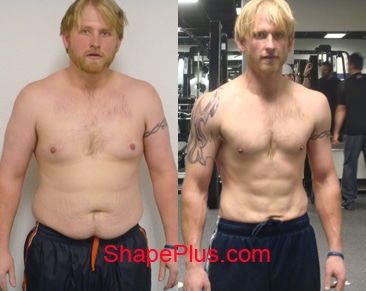
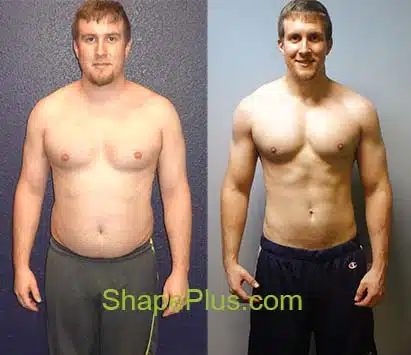
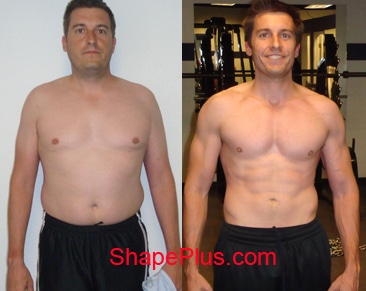
If you spent your 20s and 30s working too much, training inconsistently, eating whatever was convenient, sleeping too little or simply never learning how to train correctly, there is a very real possibility that your best physical condition is still ahead of you.

You can build muscle. You can become stronger. You can lose body fat.

You can look better in your clothes — and without them.

You can move better, feel athletic, have energy, feel sexual and feel confident in your body again.

We aren’t trying to make you 25.

We’re going to find out how damn good you can be at the age you are RIGHT NOW.

Jess & Tien

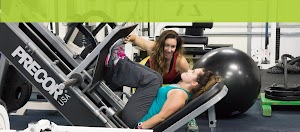
Jess Hogue training with a Shape Plus client at the Denver gym

“57 can be pretty damn good.”

— Jess Hogue

Getting Older Is Real. Automatic Decline Is Not.

I’m not denying biology. There are real physical changes that can come with age.

Muscle mass can decline. Recovery can take longer. Sleep may not be as forgiving. Injuries from years ago may start talking louder. Work stress, family responsibilities and a less active lifestyle can all pile on.

And yes, testosterone levels can decline for some men as they get older.

But none of that means you should just shrug your shoulders and accept becoming weaker, softer and less capable.

Aging changes the equation. It does not decide the outcome.

Strength training remains one of the most powerful tools men have for maintaining and improving muscle, strength and physical function as they get older. Research in older adults consistently shows that resistance training can improve strength, muscle mass and physical performance—even well beyond 40.

The difference is that the older you get, the less sense it makes to train randomly.

You need enough resistance to create change, progression that keeps you moving forward, exercises that fit your body, enough recovery, and nutrition that supports what you are trying to build.

And you need to stop measuring a good workout by how destroyed you feel afterward.

The goal is not to prove you can survive a hard workout.

The goal is to build a body that keeps getting stronger, leaner and more capable.

That is where experience matters.

A 50-year-old man with a demanding career, a bad shoulder, inconsistent sleep and 20 years of training history should not automatically be doing the same program as a healthy 25-year-old.

That does not mean we train you like you’re fragile.

It means we train you intelligently enough to keep progressing.

Respect your age.

Don’t surrender to it.

Jess and Robert

Jess Hogue with Shape Plus client Robert at Shape Plus Personal Training

Getting older doesn’t mean you stop building.

You Don’t Need to Train Like You’re 25. You Need to Train Better.

One of the biggest mistakes I see men make as they get older is thinking they have only two choices:

Train like they did when they were 25 — or start training like an old man.

Neither one makes much sense.

Getting older doesn’t mean your training has to become easier.

It means your training has to become smarter.

Smarter exercise selection. Smarter progression. Smarter recovery. Smarter decisions about when to push and when to adjust.

Smarter does not mean easier.

I am 57. I still train hard.

I want to be strong. I want muscle. I want to stay lean. I want to look good. I want to be capable of doing things most guys my age have already decided they can’t do anymore.

But I am also a lot smarter about how I train than I was when I was younger.

I don’t need to beat the hell out of my joints to prove I’m working hard. I don’t need random exercises just because they’re difficult. I don’t need to leave the gym destroyed. And I definitely don’t need to chase what I could lift 25 years ago just to satisfy my ego.

I want results now — not stories about what I used to be able to do.

That means your training has to have a purpose.

You need exercises that fit your body, enough resistance to build and maintain muscle, progressive overload so your body has a reason to adapt, and proper technique.

You need to train hard enough to change — but intelligently enough that you can come back and do it again.

And if you have an old shoulder, cranky knee, bad back, previous surgery or something else that changes how you move, we work around it instead of pretending it isn’t there.

That isn’t weakness.

That’s how you stay in the game long enough to get really fucking strong.

A good program for a man over 40 should challenge you. It should make you stronger, build muscle, and improve how you move and what you’re physically capable of doing.

But it also needs to respect the fact that you have a job, responsibilities, stress, maybe kids, maybe grandkids, and a life outside the gym.

Your training has to make the rest of your life better.

Not leave you too beat up to enjoy it.

Stronger Than You’ve Ever Been

This is another idea I want guys to understand:

Your lifetime strength peak doesn’t automatically have to happen in your 20s or 30s.

Some men were never trained correctly when they were younger. Some never followed a structured program long enough to find out what they were capable of. Some spent decades doing the same exercises with the same weights. Some were busy building careers and raising families.

So when a guy comes to me at 45, 52 or 60 and says, “I just want to get some of my old strength back,” my first thought is:

Why are we stopping at your old strength?

Maybe we can build something better.

Maybe you can have more muscle than you had at 30.

Maybe you can be leaner than you were at 35.

Maybe you can deadlift, squat, press, pull and move better than you ever learned to before.

We don’t know until we start doing the right things consistently.

That’s part of what still excites me about training after all these years.

There is always another level.

Jess and Ryan

Jess Hogue with Shape Plus client Ryan during men over 40 strength training

You may not have met your strongest self yet.

Getting Lean After 40 Is Different — But It Isn’t Impossible.

A lot of men hit their 40s and 50s and start noticing the same thing.

The waist gets thicker. The stomach gets softer. Muscle definition starts disappearing. Clothes fit differently.

And the eating habits that never seemed to matter very much at 25 suddenly matter a whole lot more.

Then somebody says:

“That’s just what happens when you get older.”

I hate that sentence because too many men hear it as a reason to give up.

Not because there is zero truth behind it. Your body does change. Activity levels often drop. Recovery changes. Sleep can get worse. Stress can go up. You may be sitting more, moving less and carrying around years of habits that finally start showing themselves.

But “things are different now” is not the same as “there is nothing you can do about it.”

There is a lot you can do about it.

And the first thing is to stop trying to lose fat the same way you did when you were 25.

You do not need another crash diet. You do not need to live on chicken and broccoli. You do not need two hours of cardio every day. And you sure as hell do not need to starve yourself until the scale goes down while your muscle goes with it.

The goal isn’t just to weigh less. The goal is to look better.

For most men, that means losing body fat while keeping — and ideally building — muscle.

That is why strength training is such an important part of getting lean after 40.

Muscle gives your body shape:

It gives you shoulders. It gives you a chest. It gives your arms some size.

It changes the way your waist looks and the way your clothes fit.

And it keeps the end result from looking like you simply became a smaller version of the same body you did not like in the first place.

Nutrition Has to Fit Your Life

This is also where a lot of plans fall apart.

A nutrition plan can be absolutely perfect on paper and completely useless if you cannot live with it.

Most men over 40 aren’t sitting around all day thinking about meal prep.

You have work, clients, meetings, family and travel. You have business lunches, dinner out, weekends and maybe a beer with friends.

Real life.

So I don’t care how impressive a nutrition plan looks if you can only follow it for twelve days.

The best nutrition plan is one that gets you the result and still lets you have a life.

That does not mean eating whatever you want whenever you want.

It means figuring out what actually matters for you — how much food you need, how much protein you should be eating, where your carbohydrates fit, how often you eat, what happens when you go out to dinner, how to handle weekends, how to adjust when progress slows, and how to do all of that without turning food into a second full-time job.

That is one of the reasons we built the Shape Plus MMAP® the way we did.

Your plan has to work in your actual life — not in some imaginary version of your life where nothing ever goes wrong.

Jess and Chip

Jess Hogue with Shape Plus client Chip during men over 40 personal training

The plan has to fit the man.

Stop Accepting the Belly

I especially want to say this to the guy who has started telling himself that the stomach is just part of getting older.

It doesn’t have to be.

Somewhere along the way, we even gave it a name — the Dad Bod — and started acting like that made it something a man was supposed to accept.

I’m not buying it.

Being a dad does not require you to have a Dad Bod. Having a career does not require you to be out of shape. Being over 40 does not mean you have to stop caring about how you look.

And wanting a leaner waist, more muscle and a body you feel proud of does not make you vain.

It means you still give a damn.

You may have to work differently than you did when you were younger. You may have to be more consistent and pay attention to things you used to ignore.

But you are not automatically sentenced to carrying a belly for the rest of your life because you got older.

You can still get lean. You can still see muscle definition. You can still put on a shirt and like the way you look in it.

You can still take the shirt off and like that too.

And no, there is nothing shallow about wanting that.

Looking good feels good.

Feeling good in your own body affects the way you carry yourself, the way you dress, the way you walk into a room and the way you experience your life.

I want that for you too.

“Everyone has amazing strength and abilities inside of themselves, and it is our job to bring out those strengths and abilities. But in order to reach our full potential, oftentimes we must get out of our own way.”

— Jess Hogue, Founder of Shape Plus

What If It Isn’t Just Training and Nutrition?

Sometimes a guy is doing a lot of things right and still knows something is off.

He is training. He is eating better. He is trying to get enough sleep.

But the drive isn’t there like it used to be.

Recovery takes forever. Strength is harder to build or maintain. Body fat seems easier to gain. Sex drive has changed. Energy is down. Maybe his concentration isn’t what it was.

And usually he knows it before anybody has to tell him.

“I just don’t feel like myself.”

I have heard some version of that from men for years.

I have also heard the testosterone conversation everywhere — in the gym, on the golf course, in the pool hall, at work and standing around watching our kids play sports.

Men are finally talking about this stuff, and that’s a good thing.

But somewhere along the way, testosterone also became a buzzword.

Every tired 48-year-old suddenly thinks he has Low-T. Every hormone clinic advertisement seems to suggest testosterone is the answer to everything. And every guy at the gym knows another guy who knows another guy who has an opinion about what your testosterone level “should” be.

That’s where I want us to slow down and get this right.

Low Testosterone Is Real. So Is Getting the Diagnosis Right.

When I originally wrote this page, I consulted with a doctor because I wanted the medical side of this discussion to be more than gym talk.

I still feel exactly the same way.

If you believe testosterone may be part of what you’re experiencing, get evaluated by a qualified medical professional.

Don’t diagnose yourself from an Instagram post.

Don’t diagnose yourself because you’re tired.

And don’t diagnose yourself from one testosterone test.

Symptoms associated with testosterone deficiency can have many causes. Current Endocrine Society guidance​ recommends diagnosing hypogonadism when a man has compatible symptoms and consistently low testosterone confirmed with properly performed blood testing, generally including at least two early-morning measurements. The physician may also need to investigate why testosterone is low rather than simply prescribing testosterone and moving on.

That’s important because I don’t want to convince you that you have Low-T.

I want you to know enough to ask the right questions if you don’t feel right.

A Number on a Lab Report Isn’t the Whole Man

There’s something else I want you to understand about testosterone testing.

A testosterone result isn’t interpreted in a vacuum.

Reference ranges vary by laboratory and testing method, testosterone levels fluctuate, and symptoms matter too. The Endocrine Society specifically warns that testing quality and repeat measurements matter because a man can test low once and then test normally when retested.

So if you have significant symptoms and somebody simply says:

“You’re inside the range. You’re fine.”

I think it is reasonable to keep asking questions.

Not because you should chase some magical testosterone number.

But because you are more than a number.

A good medical evaluation should look at the whole picture — your symptoms, repeat laboratory results, health history, medications, sleep, fertility plans and other conditions that could be contributing to what you’re experiencing.

That’s medicine.

The gym-bro version is:

“Dude, get on testosterone.”

Those are not the same thing.

TRT Is Not Steroids — And It Isn’t a Fountain of Youth

We need to get something else straight.

When I talk about Testosterone Replacement Therapy on this page, I am not talking about anabolic steroid abuse.

Shape Plus has never advocated steroid abuse.

I’m talking about testosterone prescribed and monitored by a qualified healthcare professional for a man who has actually been diagnosed with testosterone deficiency.

And even then, TRT does not do the work for you.

It does not train. It does not put the right food in your mouth. It does not make you sleep. It does not create consistency. And it does not magically build the body you want while you sit on the couch.

For an appropriately diagnosed man, testosterone therapy may improve symptoms related to testosterone deficiency and can affect things such as sexual function, body composition, bone health and other androgen-dependent functions. But treatment also requires medical monitoring and isn’t appropriate for every man.

Testosterone products also carry real considerations and potential adverse effects. Current FDA labeling includes warnings about increased blood pressure, and physicians need to consider the individual man’s health and monitor treatment appropriately.

This is medicine. Treat it like medicine.

Here’s Where Training Comes Back Into the Conversation

This is the piece I have seen firsthand.

A man gets his health properly evaluated.

Maybe he has testosterone deficiency and his physician treats it.

He starts feeling better. His energy improves. His desire to train comes back. Recovery may improve.

Great.

Now what are you going to do with it?

Because having a better hormonal environment does not automatically give you an amazing body.

You still need to build it.

That’s where intelligent strength training, nutrition, recovery and consistency become incredibly important.

And it’s why I have never looked at TRT as the program.

TRT may be one piece of a man’s health care.

Your training is still your training. Your nutrition is still your nutrition. Your choices are still your choices. Your work is still your work.

And if you put all of those pieces together correctly?

That’s when things can get really fucking good.

Refusing Decline Means Doing Something About It

I want to be clear about what I mean when I say I refuse to accept decline.

I am not pretending age doesn’t exist.

I am not trying to be 25 again.

And I am definitely not interested in chasing some ridiculous idea that a man should spend the rest of his life desperately trying to look younger.

I want to be great at 57.

And when I am 67, I want to be great at 67.

Strong. Lean. Capable. Healthy. Sexual. Confident.

Able to travel, work, play, lift things, move well, take my shirt off without thinking twice about it and participate fully in my own life.

That is what this is really about.

There is a big difference between getting older and surrendering because you think getting older requires it.

Maybe you are 43. Maybe you’re 51. Maybe you’re 62.

Wherever you are, you have a choice about what you do with the body you have right now.

You can keep telling yourself:

“I used to be…”

Or you can ask yourself something a lot more important:

“What if I never find out what I’m truly capable of?”

I’d rather find out.

What an Effective Training Program for Men Over 40 Should Include

So what does that actually look like in the gym?

There isn’t one magical workout for men over 40. I don’t believe every man suddenly needs some special collection of “over-40 exercises” because another birthday showed up. What changes is how intelligently we put the pieces together.

Strength Training That Actually Makes You Stronger.

You need resistance. Your muscles need a reason to adapt. That means progressively challenging them over time instead of repeating the same comfortable workout for years.

You should be getting stronger — not necessarily every single workout or on every exercise — but over time, your program should be taking you somewhere.

Maintenance is fine when maintenance is the goal. But if you want more muscle, more strength and a better body, we are going to train for more than survival.

Exercises That Fit Your Body.

I don’t care what exercise somebody on the internet says every man “must” do. If it doesn’t fit your body, your history or your goals, we find a better option.

Shoulder doesn’t like something? We’ll change it. Old knee injury? We’ll work with it. Back doesn’t tolerate a particular movement? There are other ways to train the muscles we need.

That does not mean babying you.

It means finding ways to train hard without being stupid.

There is a difference.

Enough Recovery to Keep Making Progress.

This becomes more important as we get older. Your workout creates the stimulus. Your body still has to recover from it. That means we look at training frequency, volume, intensity, sleep, stress and what else is going on in your life.

If you’re training hard five days a week, sleeping five hours a night and running a business that’s trying to kill you, pretending recovery doesn’t matter isn’t toughness.

It’s bad programming.

The goal is to recover well enough that you can keep improving.

Nutrition That Supports the Body You Want.

If you want muscle, your nutrition needs to support muscle. If you want to lose body fat, your nutrition needs to create that opportunity without unnecessarily sacrificing muscle. Protein matters. Calories matter. Food quality matters. Timing can matter. But none of that means you need to become obsessive.

We build your nutrition around your goals and your life.

That is a huge difference.

Conditioning Without Turning Cardio Into Punishment.

Cardio still has a place. Heart health matters. Work capacity matters. Being able to climb stairs, hike, play, travel and live without getting winded matters. But I’m not interested in using endless cardio as punishment because you ate something you enjoyed.

Cardio should support the goal. It should not replace strength training.

Progress We Can Actually Measure.

I want to know whether what we’re doing is working. That can mean strength, body weight, measurements, body composition, progress pictures, how your clothes fit, energy, performance, consistency and how you actually feel.

The scale is information. It isn’t the entire story.

If your waist is shrinking, your shoulders are growing, your strength is climbing and you look significantly better, I’m not going to lose sleep because the scale didn’t behave exactly the way somebody expected.

We’re building the whole man.

Your MMAP® Changes as You Change

This is exactly why I created the Shape Plus MMAP® — Massive Multiple Action Plan® in the first place.

One action isn’t enough. A workout by itself isn’t enough. Nutrition by itself isn’t enough. And testosterone, even when medically appropriate, definitely isn’t enough.

Your result comes from getting the important pieces working together.

Your goals.
What do you actually want? Strength? Muscle? Fat loss? Better health? More energy? Better performance? Usually it’s a combination.

Your body.
Your training history, injuries, limitations, strengths and where you’re starting now.

Your schedule.
Because the world’s greatest program is useless if it doesn’t fit your life.

Your nutrition.
What you eat now, what needs to change and what you can realistically continue doing.

Your recovery.
Sleep, stress, workload and what your body is telling us.

Your progress.
What is improving, what isn’t and what we need to adjust.

And when there is a legitimate medical issue — testosterone or otherwise — that part belongs between you and your healthcare professional.

We don’t practice medicine.

We train you.

But we’re smart enough to understand that your health, your training and your life don’t exist in separate little boxes.

Everything affects everything.

That’s the MMAP®.

And it changes as you change.

Maybe You Aren’t Done Yet.

Maybe you aren’t willing to join your buddies on the porch telling stories about what you used to be.

Maybe you aren’t willing to become weak.

Maybe you aren’t willing to become soft.

Maybe you want to feel strong and deserving.

Maybe You Aren’t Done Yet.

I’m with you. I’m not done either.

Men Over 40 Personal Training & TRT FAQs

Can I really get stronger after 40, 50 or even 60?

Absolutely.

Your age does not automatically determine how strong you can become.

A lot depends on where you’re starting, your training history, injuries, health, nutrition, recovery and how consistently you train. But I’ve worked with plenty of men who became stronger later in life because they finally started following a program that actually made sense.

Some guys are not trying to get back to how strong they used to be.

They’re becoming stronger than they’ve ever been.

That is the possibility I want you thinking about.


Do men over 40 need to train differently?

Usually smarter — not easier.

I don’t believe turning 40 suddenly makes you fragile or requires a completely different collection of exercises.

But recovery, old injuries, sleep, stress, joint tolerance and your training history can matter more than they did when you were younger.

We adjust exercise selection, volume, intensity and recovery around you.

You still need to challenge your body if you want it to change.

Getting older isn’t a reason to stop training hard. It’s a reason to stop training stupid.


Is it harder to lose belly fat after 40?

It can be, but belly fat is not something you simply have to accept because you’re getting older.

Men often become less active while work stress increases, sleep gets worse and years of eating habits start catching up with them. Changes in muscle mass and other health factors can also affect body composition.

That’s why we don’t just slash calories and pile on cardio.

We use strength training, appropriate nutrition, activity, recovery and consistency to help you lose body fat while protecting the muscle that gives your body its shape.

The goal isn’t merely a smaller number on the scale. It’s a better body.


Does every man over 40 need Testosterone Replacement Therapy?

No. Absolutely not.

Being over 40 does not automatically mean you have testosterone deficiency, and symptoms such as fatigue, low libido or difficulty concentrating can have many causes.

If you think something isn’t right, get properly evaluated rather than diagnosing yourself.

Current Endocrine Society guidance says testosterone deficiency should be diagnosed based on appropriate symptoms plus consistently low testosterone confirmed with accurate blood testing, generally including at least two early-morning measurements.

I don’t want to convince you that you need TRT. I want you to know enough to ask better questions about your health.


What are some signs that testosterone might be worth discussing with my doctor?

Changes in sexual function, libido, energy, muscle mass, strength or other symptoms may be reasons to talk with a healthcare professional.

But symptoms alone cannot diagnose Low-T.

Sleep problems, medications, obesity, illness, stress and other health conditions can sometimes cause similar symptoms. That’s why a real medical evaluation matters.

If you keep thinking:

“Something just doesn’t feel right anymore.”

Don’t ignore it.

Get some answers.


Is medically prescribed TRT the same thing as using steroids?

No — medically prescribed TRT and anabolic-steroid abuse are not the same thing.

When we’re discussing TRT here, we’re talking about testosterone prescribed and medically monitored for a man who has been appropriately diagnosed with testosterone deficiency.

We’re not advocating bodybuilding drug abuse or using testosterone at excessive levels for performance or appearance.

TRT is medical treatment and deserves to be treated that way. It requires consideration of the individual man’s health, fertility plans and ongoing monitoring.

Current FDA labeling also includes safety information such as the potential for increased blood pressure.

This is medicine. Your doctor handles the medicine. We handle the training.


Will TRT build muscle for me?

No. You still have to do the work.

If a man genuinely has testosterone deficiency and receives appropriate medical treatment, improving that hormonal deficiency may support things that matter to training and body composition.

But TRT does not lift the weights.

It doesn’t choose your dinner.

It doesn’t create your program.

And it doesn’t create consistency.

If you’re medically treated and feeling better, fantastic.

Now let’s do something with it.

Training, nutrition, recovery and consistency are still what build the body.


Does Shape Plus provide Testosterone Replacement Therapy?

No. Shape Plus is a personal training company, not a hormone clinic.

We do not diagnose Low-T, prescribe testosterone or manage hormone therapy.

If you believe testosterone may be affecting how you feel, that discussion belongs with a qualified medical professional.

What we do understand is how to build an intelligent strength, nutrition and conditioning program around the man standing in front of us — including men who are already receiving physician-supervised TRT.

Your medical care stays with your doctor.

Your training is where we come in.

Let’s Meet.

We’re going to get together and make this happen.

Men’s Over 40 personal training is available at our Denver and DTC / Greenwood Village locations.

Sending

Call Free Goal
Assessment
Menu ↑